
An Open Graph feed makes it possible to pull article data directly from your website’s metadata and use it in Heyloyalty. By mapping your Open Graph feed correctly, you ensure that the right information – such as title, image, description and link – is available. You will then be able to insert your articles into your campaigns and automations.
In this guide, we will walk you through, step by step, how to create and map an Open Graph feed in Heyloyalty so you can use the content dynamically in your communication. The guide assumes that you already have access to the URL of your Open Graph feed.
Setting up an Open Graph feed
The Open Graph feed is set up as a product feed. The setup therefore refers to product feed fields, but you are still setting up your Open Graph feed.
Step 1
Before you start mapping your product feed, make sure you have a URL for your Open Graph feed. Once you have this URL, you can map your feed. You do this under the menu item Integrations → Integrations. Then find “Product Feed” and click “Set up integration” or “Edit integration”.
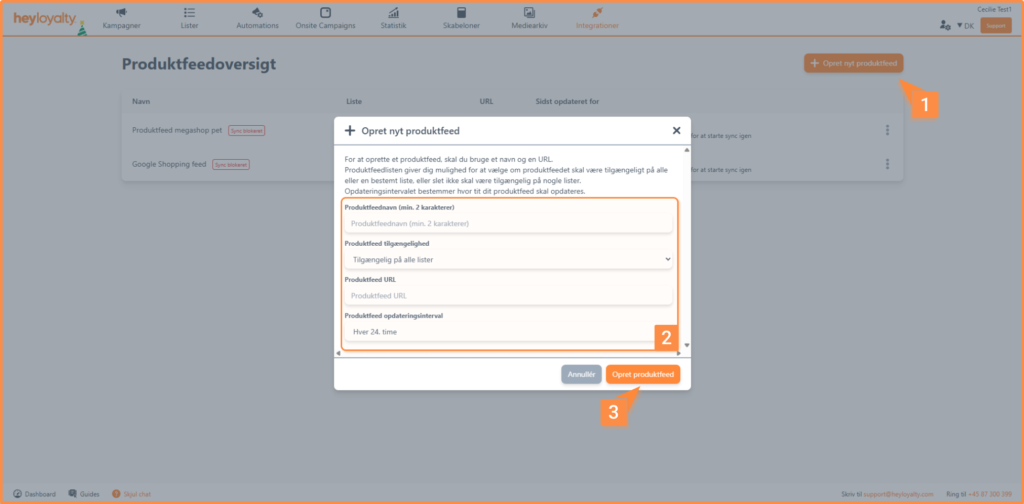
Now click Create new product feed. Product feed name is the name you give the feed so you can identify it later. Unless you have different languages or different webshops combined on one account in Heyloyalty, it usually makes good sense to set Product feed availability to Available on all lists. In the Product feed URL field, insert the URL for your Open Graph feed and then select how often your Open Graph feed should update automatically. In most cases, every 24 hours is sufficient. Finish by clicking Create product feed.
Step 2
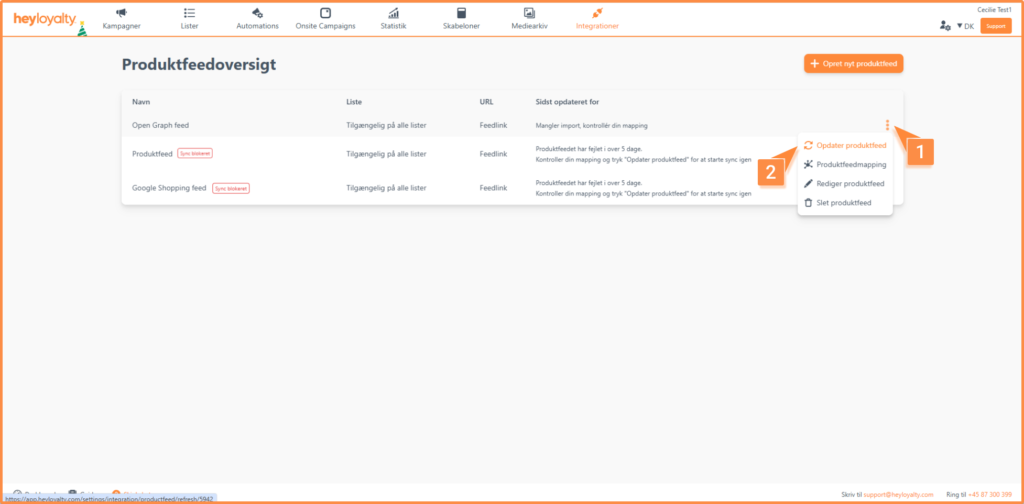
When you click Create product feed, you should be taken to the product feed mapping page. If not, click the three dots next to your product feed and select Product feed mapping.
Step 3
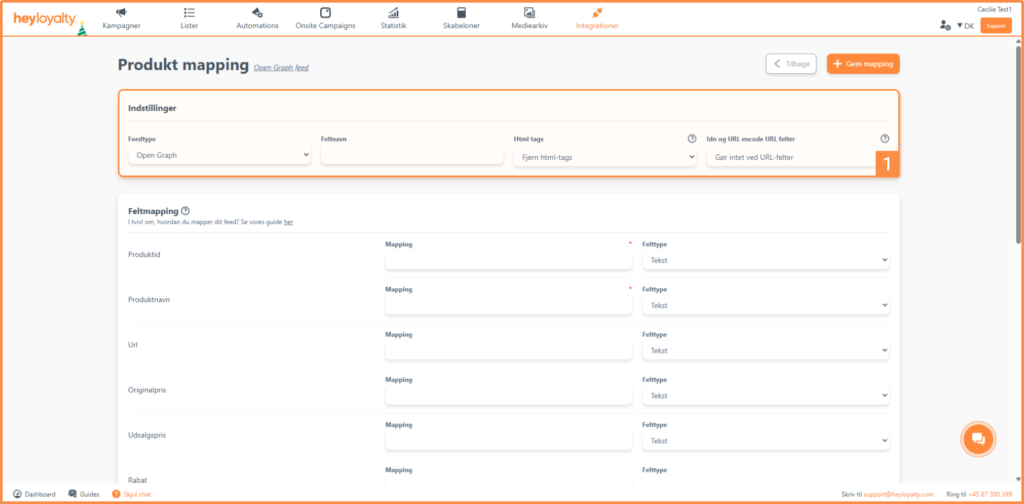
Now you’re ready to map your feed. We’ll first go through the settings for your Open Graph feed.
- Set Feed type to Open Graph.
- Do not enter anything under Field name.
- Leave the HTML tags and Idn and URL encode URL fields settings as they are.
It should look like this:
Next, you need to set up your product feed mapping. Under Product ID, you can set any mapping you like, as an Open Graph feed does not contain this field, but it must be filled in for the mapping to take effect. We recommend that you insert ID.
Then map each field to the matching field in Heyloyalty. You can see the content of your Open Graph feed by opening one of the articles on your website, viewing the article’s source code and finding all the available og: tags. Then map them to the fields in the Heyloyalty mapping. Read more about Open Graph here if needed.
An example of a mapping could look like this:
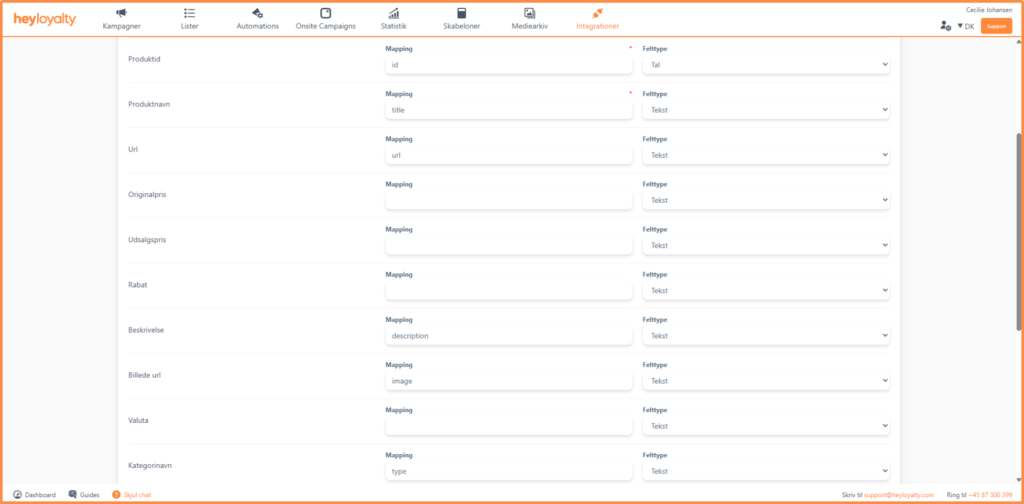
When you have filled out the field mapping, click Save mapping at the top or bottom of the page.
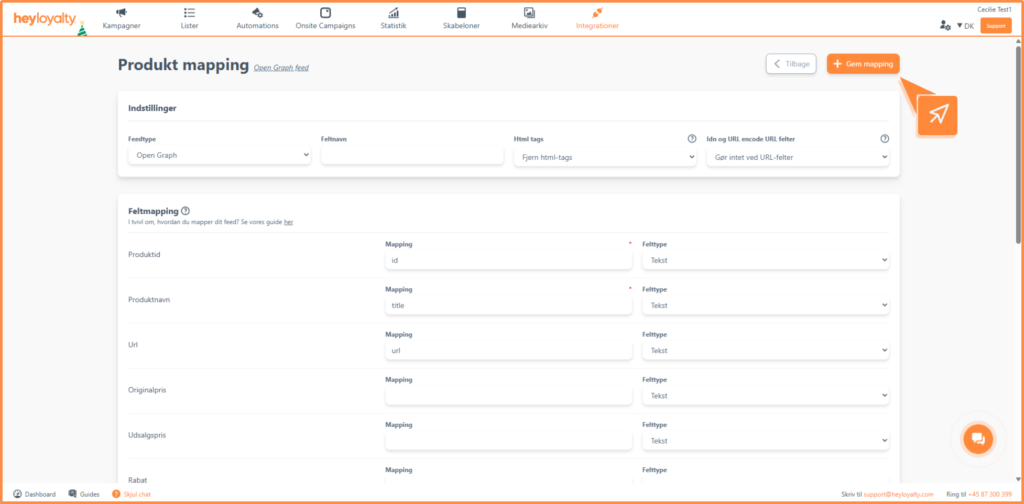
Tip: We recommend that you double-check that the mapping has taken effect. If it hasn’t, edit your mapping again. If you can’t see the mapping on the fields you mapped previously, it may be because you haven’t mapped the required fields.
Step 4
When your mapping looks correct, you need to update your product feed. To do this, click the three dots and select Update product feed.
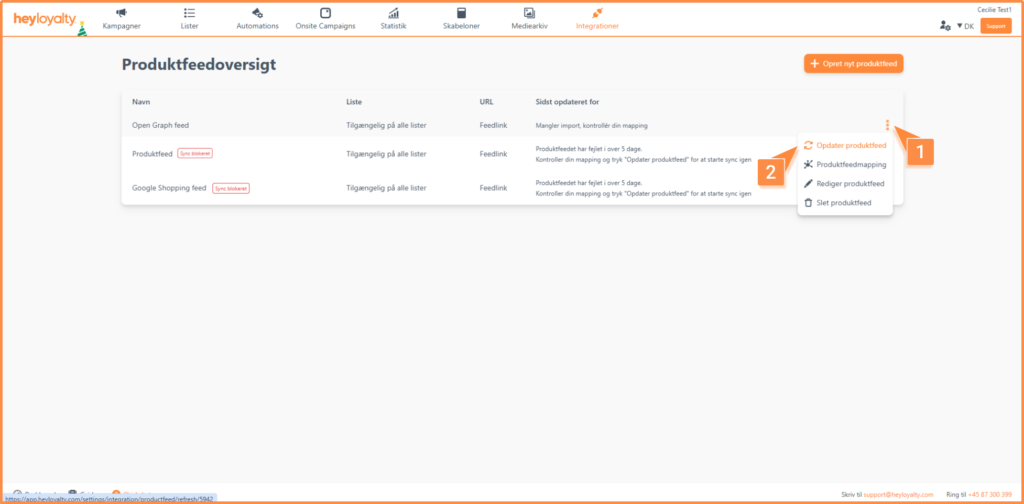
Now you’re ready to use your Open Graph feed in your campaigns and flows. Read how to insert a product feed into your campaign.
Step 5
To insert your articles into your campaigns, you need to use our advanced product feed:
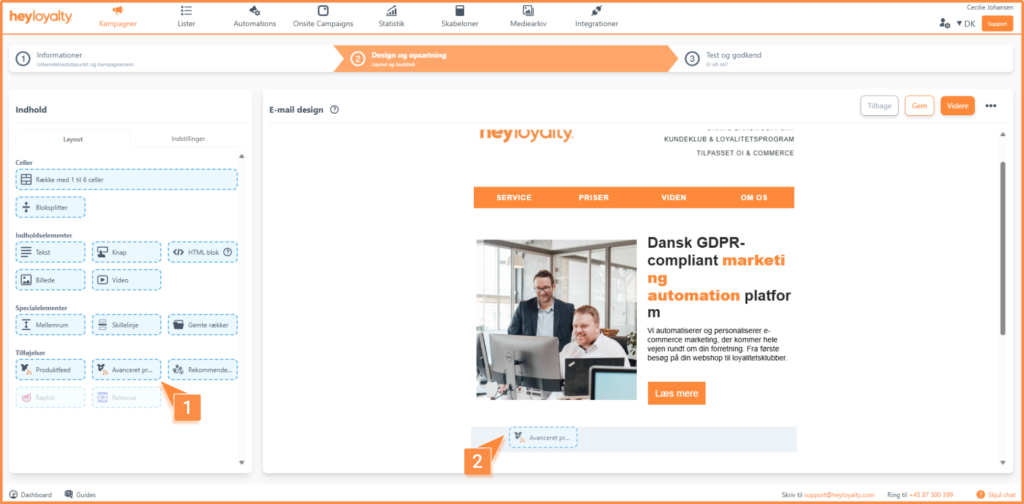
If you want the product feed to show the newest articles first, use these settings under Product search:
- Sort by: Product ID
- Direction: Ascending
In addition, you must add a search criterion using the Add a new search criterion button. Set the search criterion as follows:
- Fields: Image URL
- Action: Contains
- Value: http
Ready to use your Open Graph feed
Once your Open Graph feed is correctly mapped and updated, your articles will automatically become available in Heyloyalty with the fields you have set up. This means you can easily insert dynamic article content in both campaigns and automations – without having to update anything manually.
Remember that if you change your Open Graph setup on your website, you may need to adjust your mapping in Heyloyalty and update the product feed again.
With the right setup, you’ll save time and ensure your content is always up to date and consistent across your communications.

If you need information or help that you cannot find here on the guide site, you are always welcome to contact our support!
support@heyloyalty.com